Gran Canaria Landscape Photography: Light, Form, and Volcanic Landscapes
Gran Canaria has, over time, become one of the most important locations in my photographic work. It’s not a place that reveals itself all at once—but rather one that keeps pulling you back, again and again.
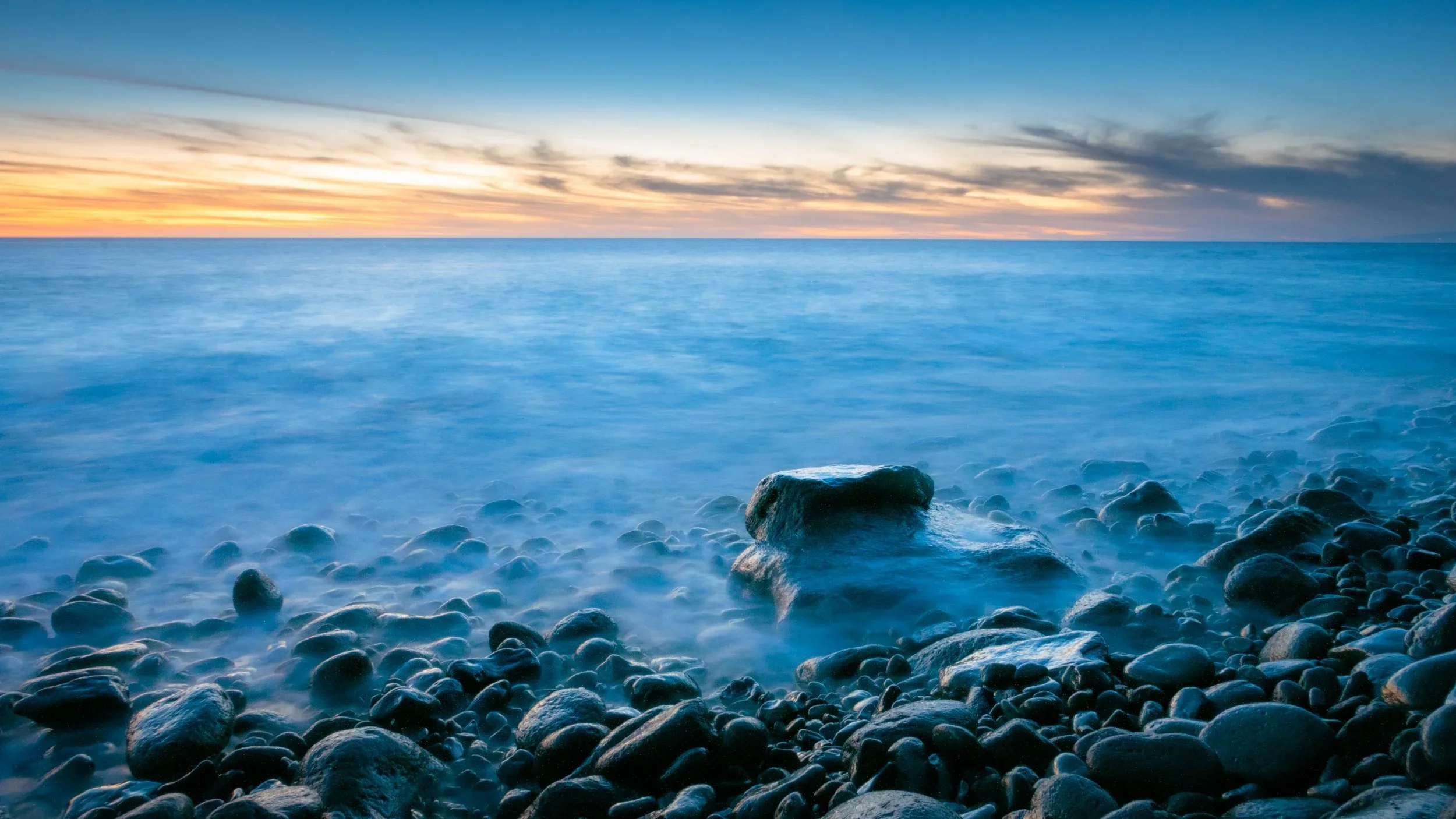
MAGICAL PEBBLE BEACHES: Gran Canaria’s coastline is exceptionally diverse, and in many places you’ll find spectacular pebble beaches fully comparable to the most beautiful in Norway. I often return to this small beach near Playa de Mogán, especially at sunset. Photo: Bjørn Joachimsen.
What makes the island so compelling is the constant interplay between terrain, light, and weather. The landscape shifts quickly. Light conditions change by the minute. And within relatively short distances, you can move from coastal textures to dense pine forests, deep ravines, and raw volcanic formations.
A Slower Way of Seeing
Over time, Gran Canaria has come to hold a particular kind of significance in my work—one that goes beyond first impressions or singular viewpoints.
It is a landscape that rewards patience. Not in dramatic, immediate ways, but through repetition and familiarity. I find myself returning to the same locations, not to recreate images, but to observe how they change—how light reshapes form, how weather alters structure, how atmosphere simplifies or complicates what is already there.
There is a quiet complexity here. The island does not depend on spectacle alone. Instead, it offers variation within structure—a continuous set of subtle shifts that only become visible over time.
This way of working suits me. It allows for a slower process, where seeing becomes more deliberate, and where each return deepens rather than repeats the experience.
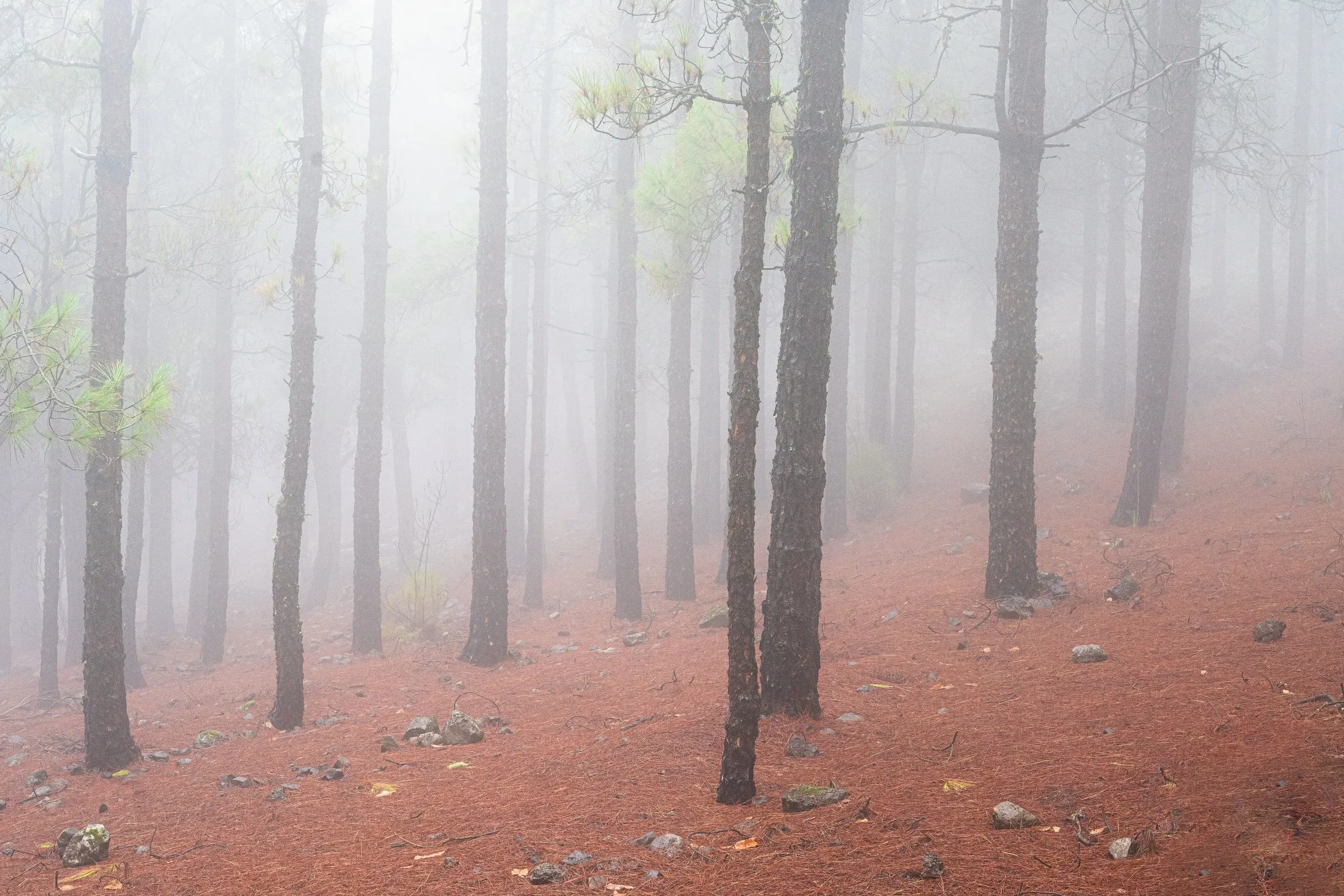
MISTY MYSTIQUE:The pine forests high in the mountains of Gran Canaria are truly unique. Dense fog frequently rolls in, creating striking visual effects. When the mist settles low across the forest floor, it produces a beautiful sense of depth. This occurs almost daily in the mountain areas above approximately 4,600 feet. Photo: Bjørn Joachimsen
Variation Within a Small Geography
What makes Gran Canaria unique is how much it offers within a relatively small area. Along the coast, the island reveals a surprising diversity—ranging from dark volcanic shores to textured pebble beaches. Near Playa de Mogán, I often return to a small, quiet stretch of shoreline where rounded stones respond subtly to the movement of the tide. At sunset, the changing light and gentle motion of the water create an endless series of variations.
Further inland, the terrain becomes more sculptural. Deep barrancos cut through the island, where volcanic rock has been shaped over time into flowing, almost organic forms. In certain places, the resemblance to the American Southwest is striking—not as imitation, but as a shared geological language shaped by erosion and time.
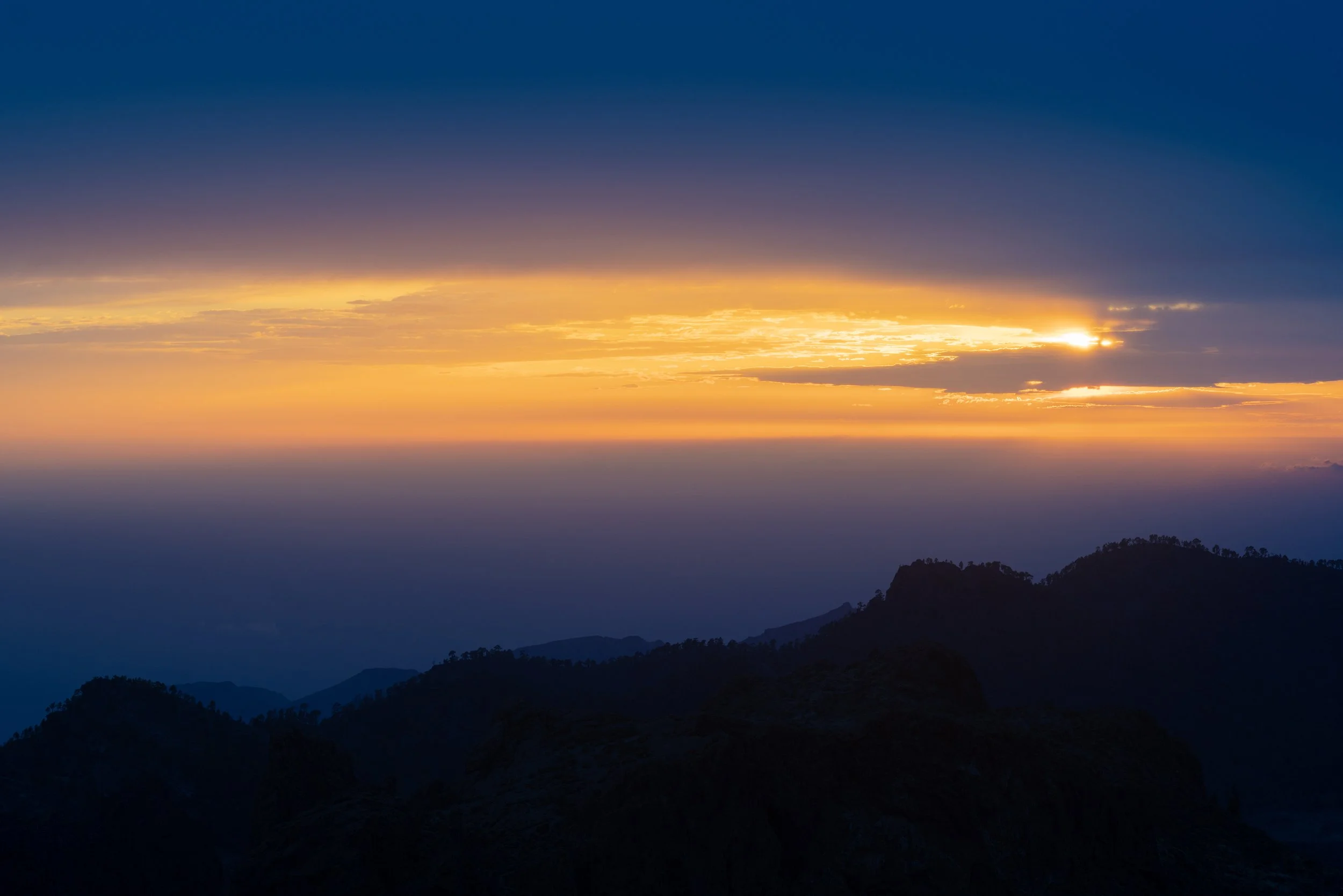
DRAMATIC SUNSETS: Gran Canaria lies relatively close to the equator, which means sunsets unfold much more quickly than we are accustomed to at northern latitudes. From the mountain plateau near Roque Nublo, you have an extraordinary view of rugged mountain contours. On clear days, you can also see Tenerife and Spain’s highest peak, Mount Teide, on the horizon. Photo: Bjørn Joachimsen.
Light as a Moving Element
Light behaves differently here than in northern latitudes. Being closer to the equator, sunsets are shorter, more compressed, and often more intense. There is less time to react, which places greater emphasis on anticipation and positioning.
From the high plateau near Roque Nublo, the view opens across layered mountain ridges that recede toward the horizon. On the clearest days, Mount Teide on Tenerife appears in the distance, rising above the cloud layer. These moments are brief and easily missed, but they carry a strong sense of spatial depth.
At higher elevations—typically above 4,600 feet—the atmosphere shifts again. The pine forests are frequently enveloped in fog, often forming low, dense layers that move slowly across the terrain. When the mist settles close to the ground, it reduces visual complexity and introduces a quiet sense of depth. These conditions occur often enough that they become part of the working rhythm rather than an exception.
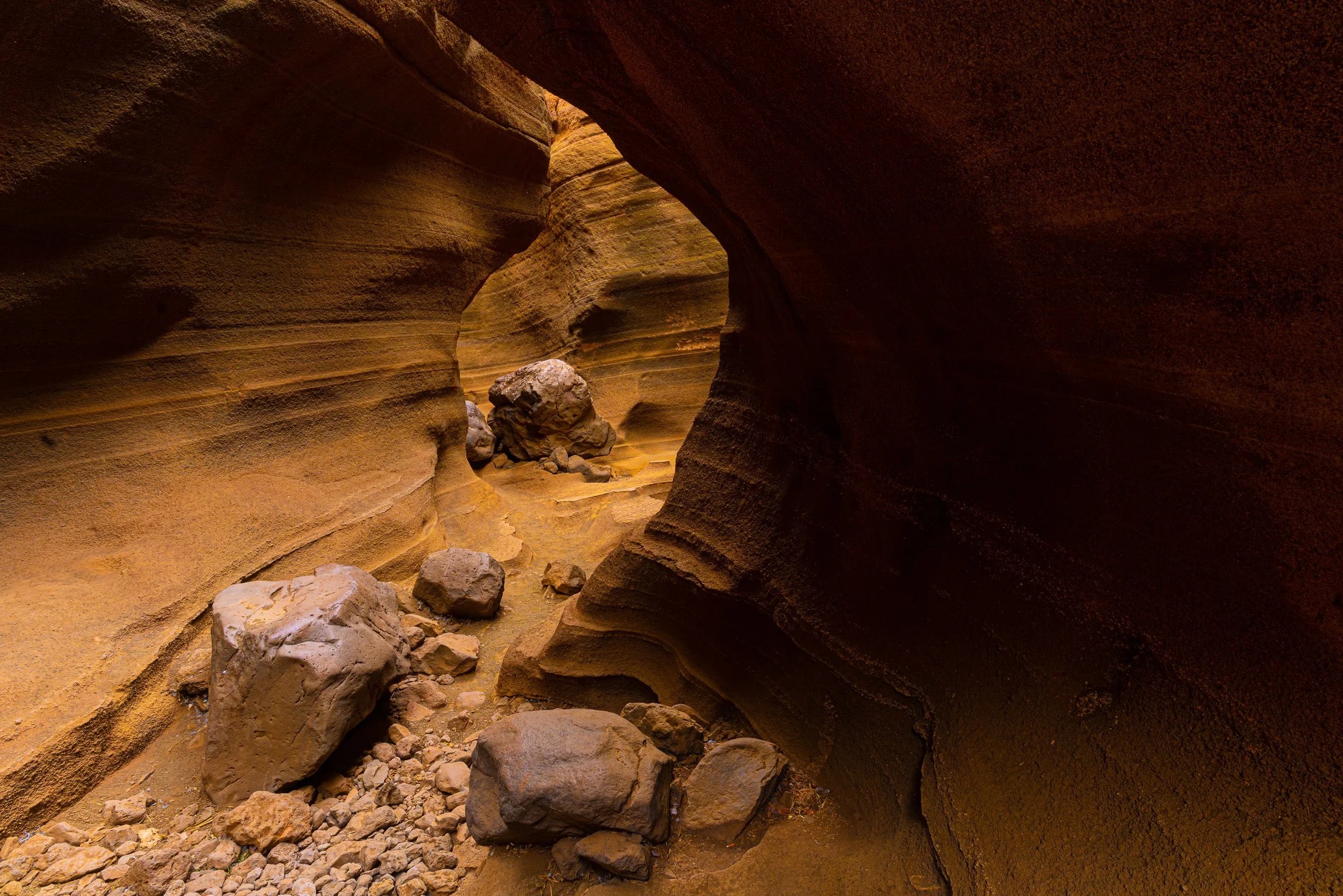
NATURE’S DESIGN: Through long geological processes, volcanic mountains have emerged and been sculpted into remarkable forms in this barranco. Many visitors are reminded of Antelope Canyon in the United States when they arrive here. Photo: Bjørn Joachimsen.
Form, Structure, and Geological Time
Gran Canaria’s volcanic origin defines much of its visual character.
The Caldera de Bandama is one of the clearest expressions of this. With a diameter of roughly 3,300 feet at the rim, it forms a contained landscape rich in both structure and detail. Vegetation, erosion patterns, and shifting light all interact within a clearly defined space. When fog moves into the crater, the sense of scale becomes more ambiguous, and the entire scene takes on a different visual weight.
Elsewhere, erosion and volcanic composition have created distinct vertical forms. El Fraile rises from the plateau near Roque Nublo, its shape both simple and expressive, surrounded by high-altitude pine forest. Nearby, Roque Nublo itself stands as a solitary mass—an 80-meter monolith anchored in open space. Its presence is direct and uncompromising, yet constantly altered by light and weather.
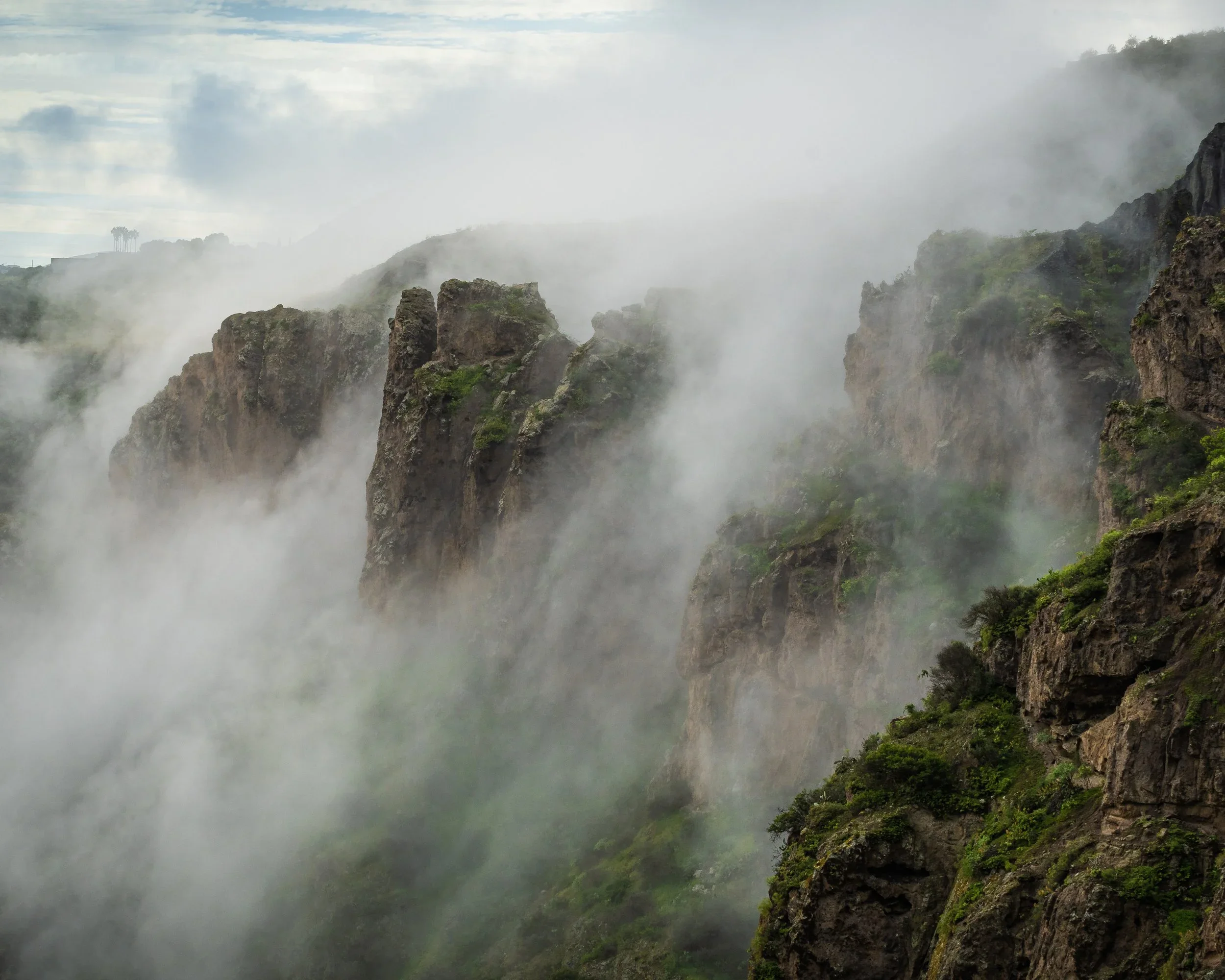
A VOLCANIC CRATER IN A CLASS OF ITS OWN: The impressive volcanic crater Caldera de Bandama offers so many photographic opportunities that a full day with the camera often feels insufficient. The crater measures approximately 3,300 feet in diameter at the rim and contains rich plant and wildlife. The landforms themselves are fascinating to work with—especially when fog cascades down into the crater. Photo: Bjørn Joachimsen.
Surface, Rhythm, and Motion
In the south, the landscape becomes more minimal.
The dunes of Maspalomas are defined less by structure and more by surface—by line, rhythm, and subtle tonal shifts. Wind reshapes the sand continuously, and the quality of light determines whether forms appear soft or sharply defined. It is a place where composition becomes an exercise in reduction.
Along the coast, the interaction between ocean and volcanic rock introduces a more dynamic element. At El Bufadero, the sea has carved a cavity connected to an underground channel, forcing water up through the rock in irregular intervals. Waves surge, retreat, and return, never quite repeating themselves. It is a location that demands time and observation. I often remain there for long periods, watching how each sequence unfolds before deciding when to release the shutter.
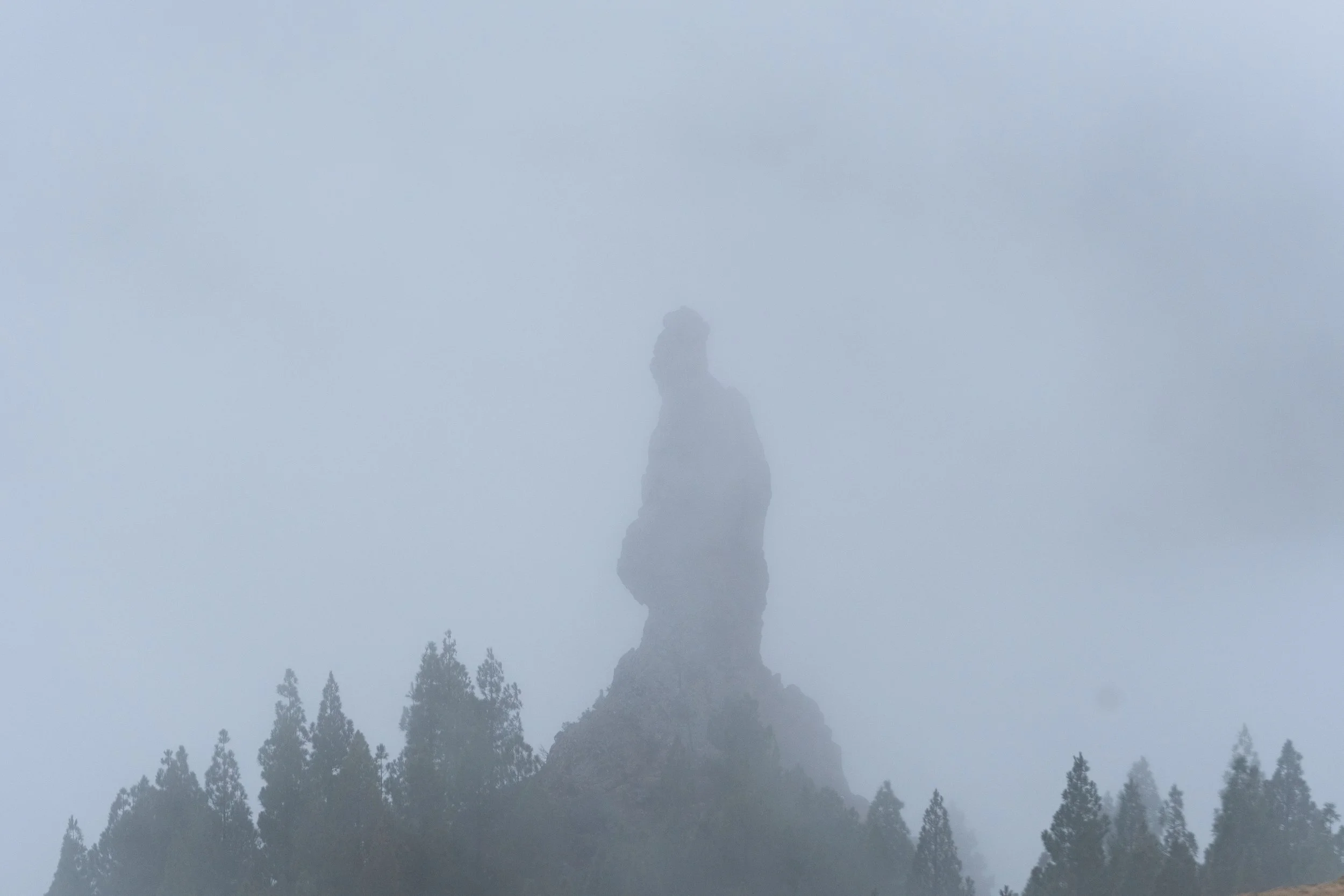
THE MONK IN THE MIST: Due to the composition of the volcanic rock and the erosion it undergoes, striking cliff formations appear throughout the island. El Fraile stands like a monument on the mountain plateau near the even larger formation Roque Nublo, surrounded by beautiful pine forest about 5,250 feet above sea level. Photo: Bjørn Joachimsen.
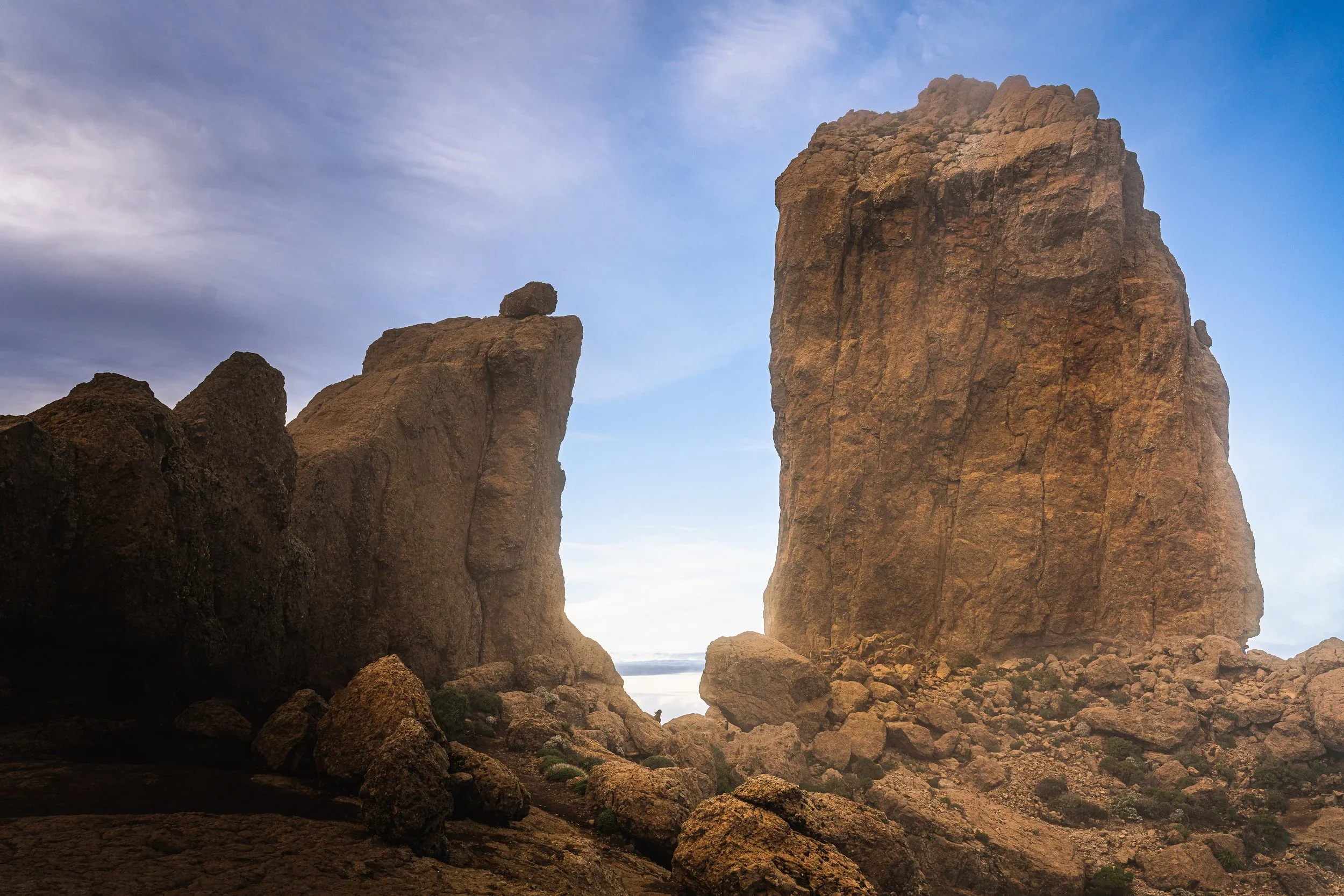
Roque Nublo, Gran Canaria. Foto: Bjørn Joachimsen.
Returning as Practice
Gran Canaria is not a place I think of in terms of completion.
It is a landscape that remains open—one that continues to offer new possibilities through small variations rather than dramatic change. The more time spent here, the clearer its patterns become: how fog forms and dissipates, how light moves across different elevations, how certain locations respond under specific conditions.
For me, that is where its true value lies.
Not in what it offers at first glance—but in what it continues to reveal over time.
And that is why I keep coming back.

THE CAULDRON BY THE SEA: El Bufadero is a fascinating natural phenomenon that is difficult to explain—it simply must be experienced. Over time, the ocean has carved a large cavity into the rock at the water’s edge, along with an underground tunnel that pumps water up and down. Powerful waves frequently surge over the rim, filling the basin. I can stand here for hours with my camera, observing the countless variations in the sea’s encounter with the land. Foto: Bjørn Joachimsen.
Photography Workshop in November/December
If this landscape speaks to you, we will be returning to Gran Canaria for our Photography Workshop in November/December, where participants will have the chance to experience and photograph many of the island’s most rewarding locations together with us in the field.
Read more here: Gran Canaria Photography Workshop, Nov 30 – Dec 6, 2026